
Dog Training
1. Pets Central Veterinary Academy Puppy Class
The start of a dog’s life is incredibly important, forming a foundation for the rest of your dog’s life. Pets-Central puppy class has been designed to give your puppy a great foundation during this critical time, helping it grow to become a well-rounded dog. The class covers puppy socialisation, obedience training, environmental desensitisation, as well as providing information on canine body language, diet and much more. With a maximum of 8 puppies per class, the intimate structure ensures that every owner receives the direction they need. Practical training techniques are used so participants can easily continue using them after completing the course.
Trainer Introduction – Vienn
Vienn is the founder of a successful dog training school in Australia, recently returned to Hong Kong, and aims to educate pet owners on canine behaviours and broaden her knowledge of dogs further. As a qualified dog trainer through NDTF (National Dog Trainers Federation) and a certified puppy instructor, Vienn has worked with and been mentored by world-class trainers, such as Boyd Hooper and Steve Mcloche. Vienn specializes in modifying canine behaviours and puppy development, as well as scent detection training. She also has years of experience with tactical working dogs, decoy work, civil training and drive development.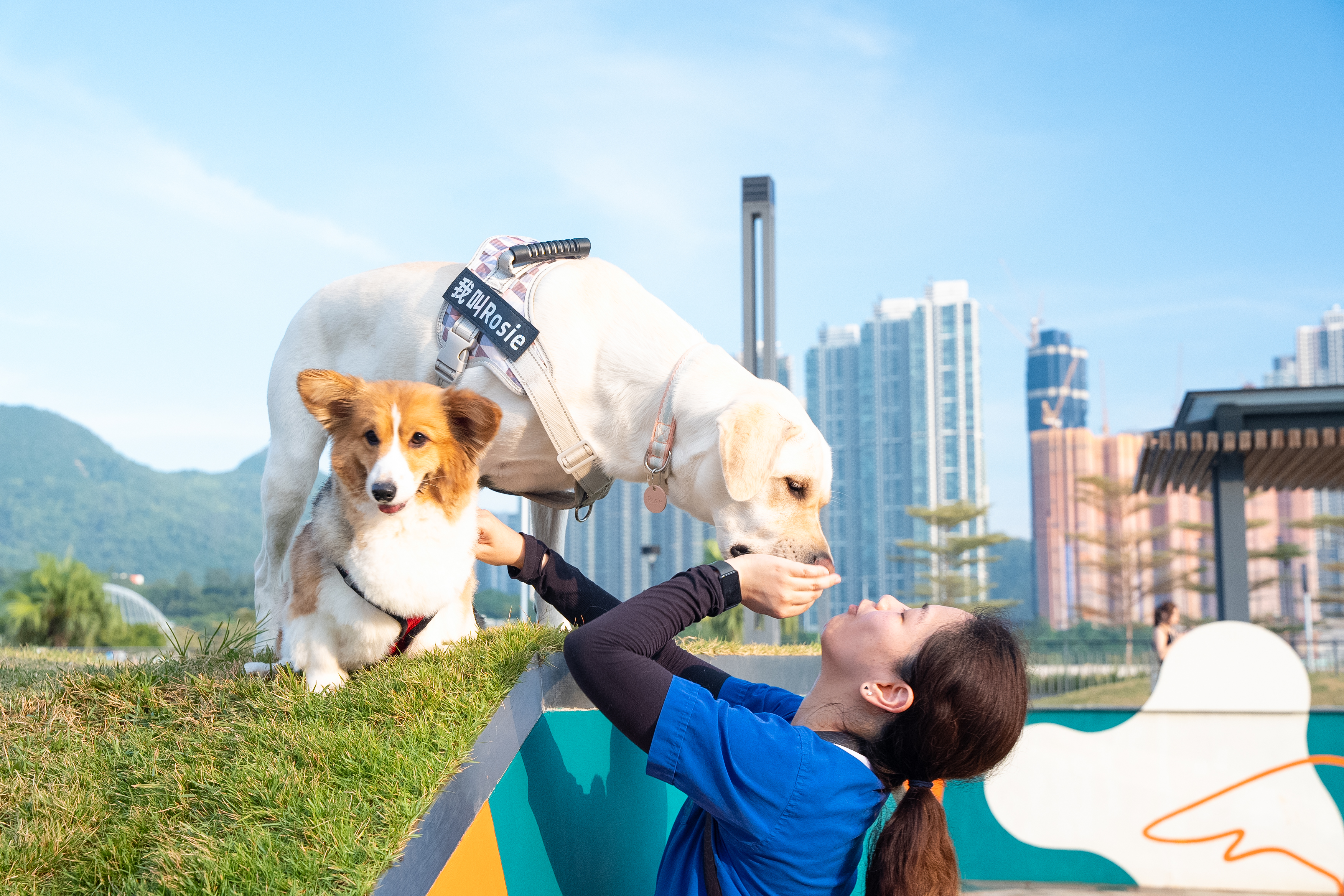
Class structure
Date and Time
North Point (Conducted in Cantonese)第十期 (名額已滿)
1月24日(星期六),10:00-11:00
1月31日(星期六),10:00-11:00
2月07日(星期六),10:00-11:00
2月14日(星期六),10:00-11:00
2月21日(星期六),10:00-11:00
第十一期(名額已滿)
3月14日(星期六),10:00-11:00
3月21日(星期六),10:00-11:00
3月28日(星期六),10:00-11:00
4月04日(星期六),10:00-11:00
4月11日(星期六),10:00-11:00
第十二期
4月25日(星期六),10:00-11:00
5月02日(星期六),10:00-11:00
5月09日(星期六),10:00-11:00
5月16日(星期六),10:00-11:00
5月23日(星期六),10:00-11:00
第十三期
6月06日(星期六),10:00-11:00
6月13日(星期六),10:00-11:00
6月20日(星期六),10:00-11:00
6月27日(星期六),10:00-11:00
7月04日(星期六),10:00-11:00
Sai Kung (Conducted in English)
1st Intake (Full)
25 Jan (Sun), 11:00-12:00
01 Feb (Sun), 11:00-12:00
08 Feb (Sun), 11:00-12:00
15 Feb (Sun), 11:00-12:00
22 Feb (Sun), 11:00-12:00
2nd Intake (Full)
15 Mar (Sun), 11:00-12:00
22 Mar (Sun), 11:00-12:00
29 Mar (Sun), 11:00-12:00
05 Apr (Sun), 11:00-12:00
12 Apr (Sun), 11:00-12:00
3rd Intake
26 Apr (Sun), 11:00-12:00
03 May (Sun), 11:00-12:00
10 May (Sun), 11:00-12:00
17 May (Sun), 11:00-12:00
24 May (Sun), 11:00-12:00
4th Intake
07 Jun (Sun), 11:00-12:00
14 Jun (Sun), 11:00-12:00
21 Jun (Sun), 11:00-12:00
28 Jun (Sun), 11:00-12:00
05 Jul (Sun), 11:00-12:00
Class Outline
.png)
.png)
Theory
Puppy development and canine communication
Puppy development period - Critical period and fear period
Socialization vs neutralization - Things to do and not to do when puppies are afraid
Canine communication
Socialization checklist
Obedience training
Marker word
Name recognition
Practical exercise
Socialization game
Week 2
Theory
Common puppy problem behaviors
Mouthing
Biting
Touch sensitivity
Jumping on people
Housetraining
Obedience training
Release word
Sit
Week 3
Theory
Canine interaction
The greeting
Understanding play style for different breeds
Play pause/arousal level
Healthy play vs bullying
Obedience training
Recall
Practical exercise
Meet and greet game
Recall race
Week 4
Theory
Dry food discussion
What is dry food
Importance of complete and balance
Biologically appropriate raw food (Barf) model diet
Feeding guide
Transition guide
Daily ratio guidelines for puppies and adult dogs
Safe and toxic food guide for dogs
Parasite treatment
Obedience training
Drop
Week 5
Theory
FAQ’s
Questions and answers
Obedience training
Loose lead walking
Practical exercise
Graduation
Photos
Any extra information
Requirements
Puppies must be under the age of 8 months old on start datePuppies must have first c3 vaccination (normally given by breeder on 6 or 8 weeks), upload proof of vaccination during the sign-up process
Puppies must be on standard leash with a harness and a standard flat collar, retractable or bungee leash are not allowed
2 adults max per puppy
Owners are to bring treats and toys for their puppies
Owners must wear comfortable clothing with closed toes shoes, no high heels or slippers for safety reasons
Owners are welcome to record the precious moments of the class, but please respect others' privacy
Please contact us at +852 2811 8907 (North Point) or +852 2792 0833 (Sai Kung) for any inquiries
2. Online Lecture: Separation Anxiety in Dogs
.png)
Date and Time
Separation Anxiety Workshop Outline
Dog training 101
What is separation anxiety
Separation anxiety responses
Separation anxiety Causes
Separation anxiety prevention
Separation anxiety treatment options and training
As a qualified dog trainer through NDTF (National Dog Trainers Federation) and a certified puppy instructor, Vienn has worked with and been mentored by world-class trainers, such as Boyd Hooper and Steve Meloche. Vienn specializes in modifying canine behaviours and puppy development, as well as scent detection training. She also has years of experience with tactical working dogs, decoy work, civil training and drive development. Currently a vet assistant in Pets Central after moving to HK.
3. Online Lecture: Resource/Food Guarding Workshop Registration

Date and Time
Workshop Outline
Understanding Resource Guarding in Dogs
Resource guarding is a typical yet challenging behaviour often observed in dogs. Simply put, it occurs when a dog exhibits aggressive, defensive, or avoidant behaviours to protect something it values—fearing that this resource might be taken away. It’s essential to recognise that a dog exhibiting resource guarding is not inherently a “bad” dog; instead, this behaviour can lead to situations that are troublesome, frightening, or even dangerous.
What Is a Resource?
A “resource” is anything your dog considers valuable at any given moment. This can include food, toys, treats, specific spaces (such as their bed or the sofa), objects, people, or even their territory. Resource guarding is not related to dominance; for example, if a dog growls or snarls when asked to get off the sofa, it may be guarding that particular space rather than asserting dominance.
Why Is Resource Guarding So Common?
There are several reasons why dogs develop resource guarding tendencies. These include:
- Inadvertent human reinforcement (such as repeatedly taking items away from a dog)
- Learnt from interactions with other dogs or animals
- Lack of proper socialisation or poor upbringing
- Underlying medical problems
- Genetic predisposition
How Can You Tell if Your Dog Is Resource Guarding?
- Placing their body over the object or area
- Escaping with the resource
- Lip licking, tail tuck or yawning
- Freezing or stiffening when approached
- Growling, snapping, or biting
As a qualified dog trainer through NDTF (National Dog Trainers Federation) and a certified puppy instructor, Vienn has worked with and been mentored by world-class trainers, such as Boyd Hooper and Steve Meloche. Vienn specializes in modifying canine behaviours and puppy development, as well as scent detection training. She also has years of experience with tactical working dogs, decoy work, civil training and drive development. Currently a vet assistant in Pets Central after moving to HK.